
Theatre director Anna Dankova talks to choreographer Luciana Achugar (USA/Uruguay) after Achugar’s Sofia workshop, The Pleasure Practice (A Spell for Utopia).
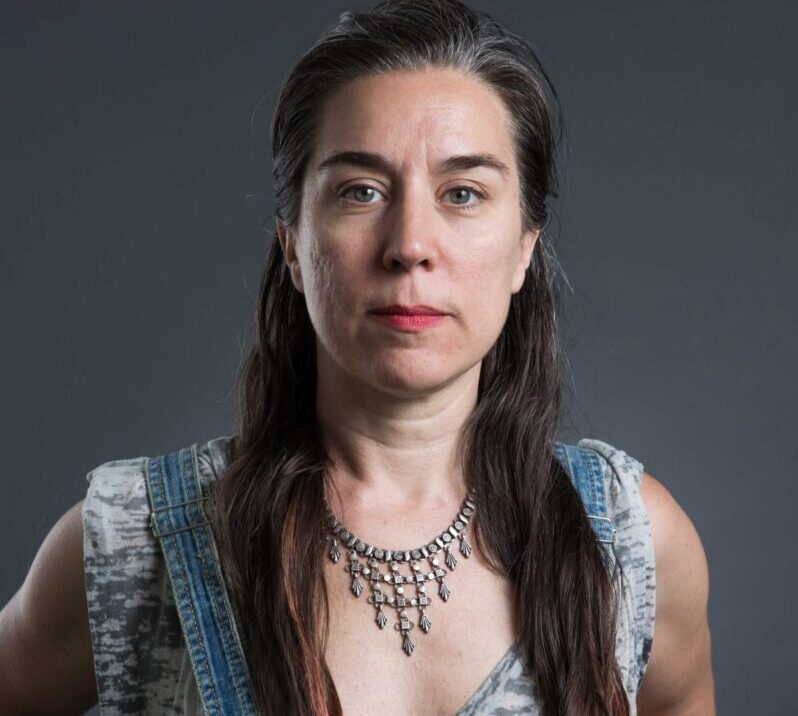
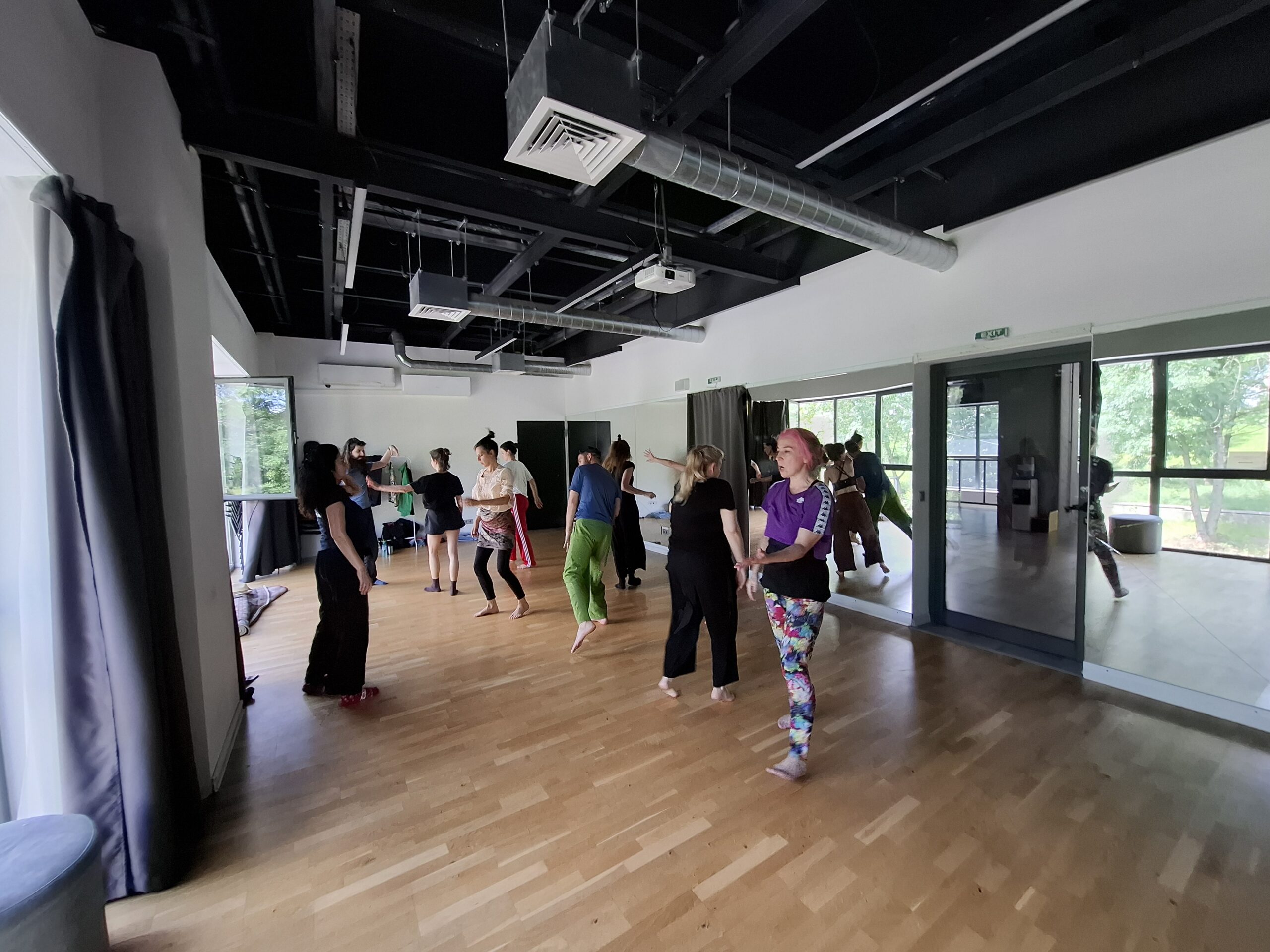
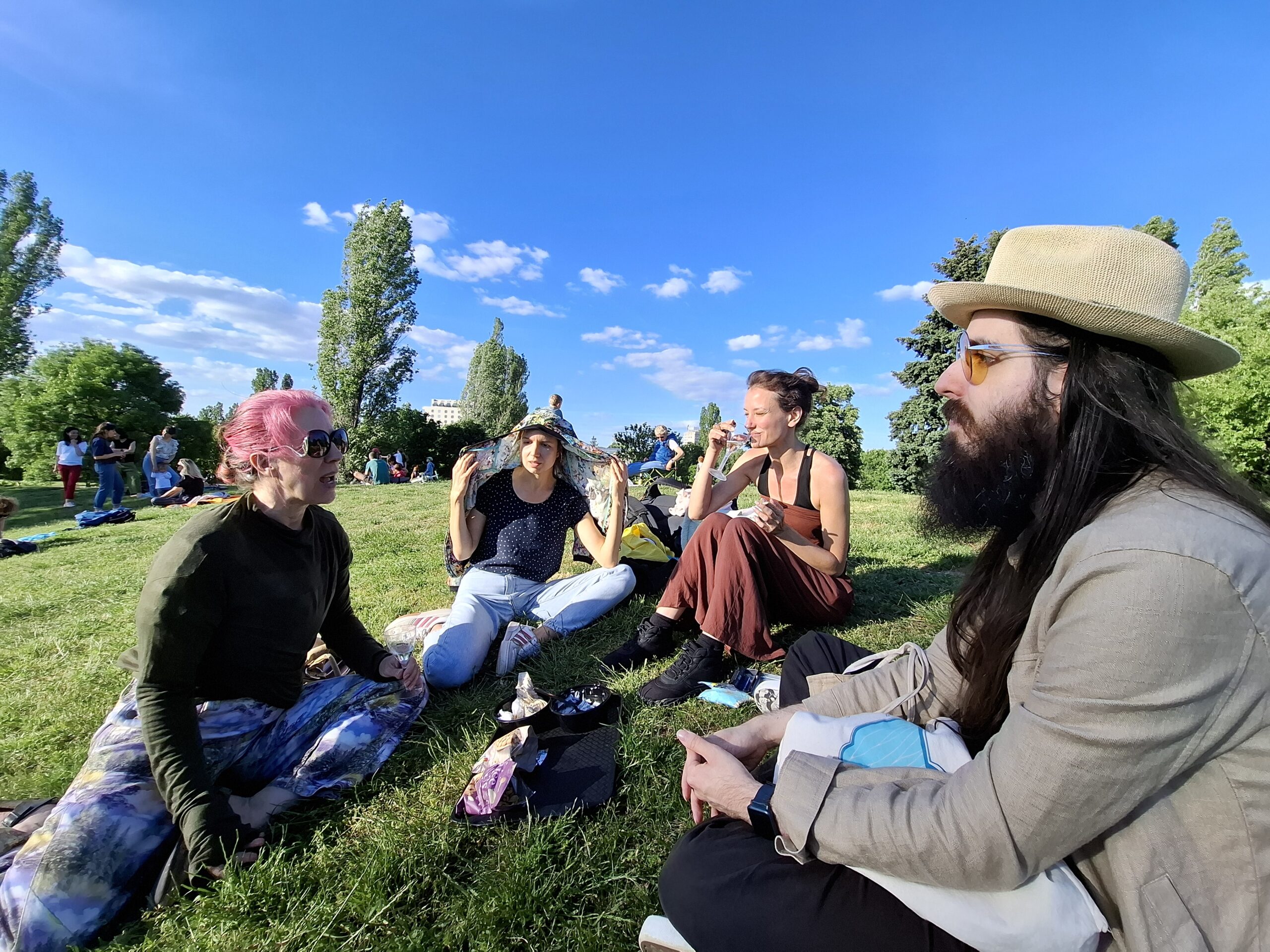
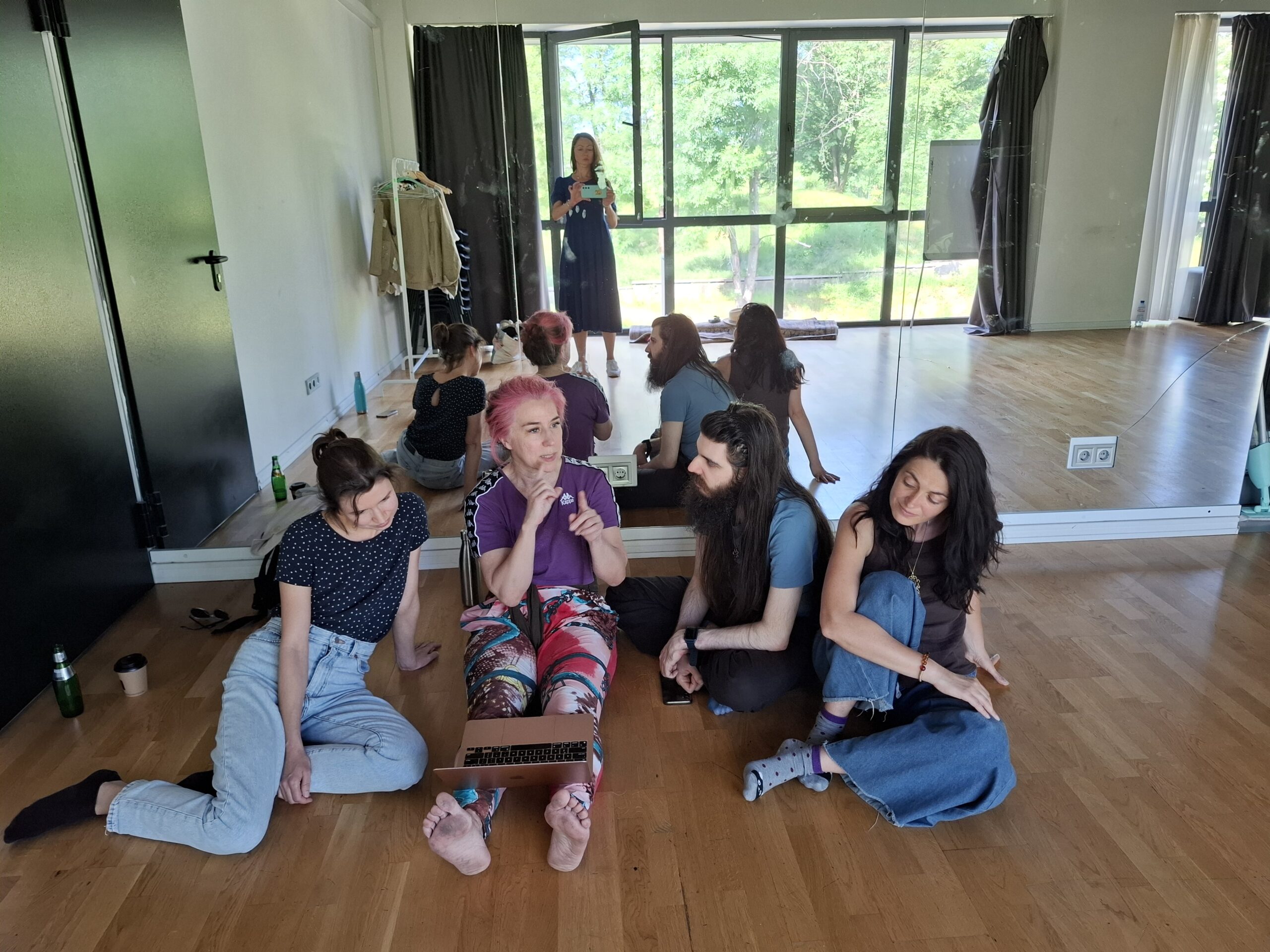
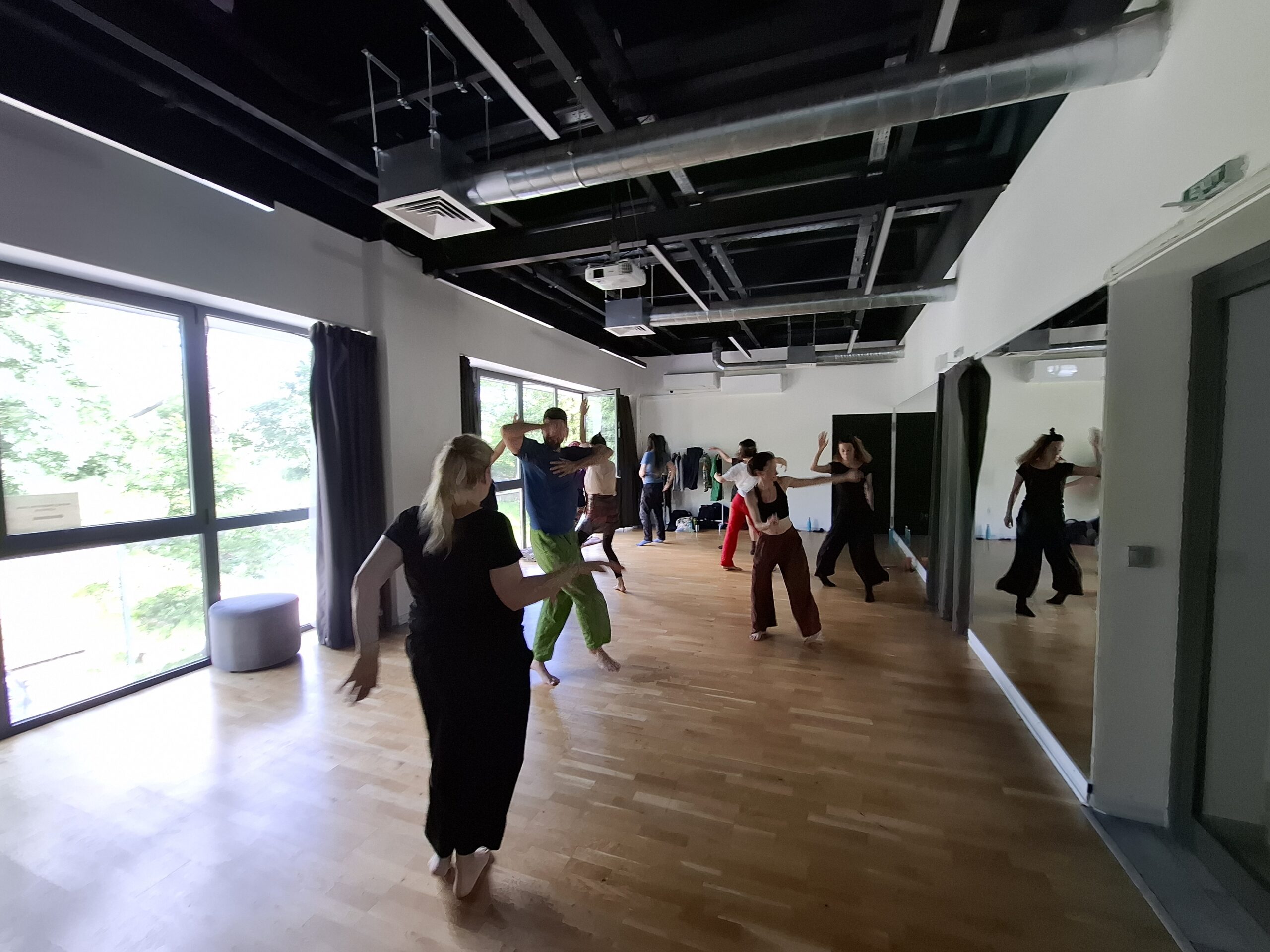
In May this year, Luciana Achugar (USA/Uruguay), a New York-based choreographer and performer, visited Sofia as part of a project, initiated by the New Dramaturgies Platform. During her artistic residency, she led a workshop entitled The Pleasure Practice (A Spell for Utopia)drawing on her personal artistic explorations of the relationship between collective practices and dance as healing; healing as a creative process; and process as ritual. For Luciana Achugar, being in pleasure is a practice of unlearning and freeing oneself from the learned hierarchical model of embodiment programmed into us, as well as from the shame that accompanies it. It is a search for a more liberated, empowered, decolonised, uncivilised “self” — one that is more deeply connected to its instincts, heart, guts and sexuality, and that celebrates togetherness and connection with the earth, with oneself and with others. In her work, the choreographer draws on a range of dance techniques and tools derived from somatic healing practices. Luciana Achugar spoke with theatre director Anna Dankova about her ideas and practices.
How did you find your experience in the Balkans?
I liked it very much. I guess it’s because of what people have gone through. I really appreciate the perspective on the world from that part of the world. It feels more realistic. I enjoy that it’s not marked by the naivety, entitlement, and privilege that I often associate with the West—with the United States and Western Europe. I don’t know whether it’s your geographical position or the fact that you’ve experienced both communism and capitalism, but it feels like people have a more mature and realistic view of society and of different economic systems. I’m interested in the way you look at the world and relate to what’s happening in it right now. And I also sense a kind of depth.
Could the sense of depth be connected to the pre-Christian symbolic and ritual layers that are still alive in Balkan culture, and that are also connected to your artistic laboratories and practices?
Yeah, maybe that’s what it is. I can still feel something pre-Christian, something pagan, that remains very strong there and seems to have been erased elsewhere. I guess that’s why I started calling this decolonization. Maybe because the Western European powers—France, England, the countries that colonized the Global South—seem to have made a very deliberate effort to erase that connection, even from themselves. When they talk about people of color or Indigenous people, they often describe them as more barbaric because they are more connected to nature. Indigenous cultures have often been represented as somehow more animal-like or less civilized. But every culture begins there. Every culture has ancestors who were connected to nature, ritual, symbolism, and archetypes—to the unconscious, to magic, and to the natural world. It feels to me that my practice is an attempt to free myself from the repression that cuts us off from that connection. And I really feel it in the Balkans. Superficially, everything looks like anywhere else—I walked to the mall every day, and it could have been any mall in the world. But in the culture, in conversations, that connection feels much more alive to me than it does in Western Europe or here in the United States.
Talking about decolonization, we naturally arrive at concepts such as patriarchy and matriarchy, which are important both to postcolonial thought and to your practice. When you began developing your method, were you already thinking in terms of these concepts, or your practice emerged intuitively and later found its theoretical framework?
I always started from an instinctive place, from the actual desire in the body that emerged during rehearsals and improvisations with the people I was working with. At that time I wasn’t teaching much—I was mostly rehearsing and making work. The intellectual part always came later, especially when I had to write. I had to apply for grants and funding, and that forced me to think more consciously: What the hell am I actually doing? Instinctively, intuitively, I felt I understood something. I knew what interested me. But when I tried to articulate it—to write and speak about it—that was when I began to realize there was something fundamentally matriarchal in what I was doing.
Because I first started working only with women. What’s interesting is that in Ljubljana the workshop was also made up entirely of women, and something really powerful happened there. When men participate, they’re often deeply connected to their feminine side, regardless of whether they’re gay, trans, or straight. But when it’s a group of women, something different happens. Maybe it’s because of pleasure itself. Pleasure carries an inherently feminine energy—not in terms of gender, but as a way of being deeply embodied in sensation, feeling, emotion, and the pleasure of experiencing them. Whatever your gender is, there’s something in that embodied experience that shifts values. So that’s when I began to realize what I was really interested in.
So patriarchal institutional practices forced you to articulate an embodied practice into language?
Exactly. In a very practical sense, yes. I needed funding to make the work, so I had to articulate what I was doing. At the same time, I also come from a very intellectual family. My father is a professor of literature who has taught literary theory and comparative literature. I grew up surrounded by people who talked about ideas, so I think I carry some of that with me. I’m not especially well-read or scholarly. I’ve read some theory and I know some of those references, but I’m not an academic. Still, I enjoy working with ideas. When I’m making a piece, I get really excited by the conceptual dimension of it.
Can you tell me about your process?
When my son was born, I decided to make a solo because I couldn’t imagine working with a group. I would go to rehearsals with him, breastfeeding him between rehearsing. At the time I had to apply for funding while I still having no clear idea what the piece was. All I knew was that I kept writing about desire. What excited me was realizing that I wasn’t interested in making a dance as much as in making a work about the desire to dance. Could I make a dance that dealt with the actual desire to move? Watching my baby, who couldn’t yet move but was already full of desire to reach beyond himself, became part of that thinking. So for me it’s always a dialogue between intuition and concept. The work begins in the body, but when I try to articulate it, the concept becomes exciting too.
Later I read Edward Said’s Orientalism, and something clicked. The colonial idea that those closer to the earth are seen as more barbaric mirrored something I was already feeling in dance. Dance became a place where I could step outside the ideal of being “civilized.” I realized how much repression—of desire, of the body, of sexuality—had shaped me growing up in a Catholic family. Making work became a way of freeing myself from that shame.
I think the work always begins as something deeply intuitive, almost as a form of self-healing. My therapist once said that I probably started making this work because I needed it myself. I believe that’s true.
Over time it becomes something larger than my own story. It starts to connect with something collective. I don’t think art is primarily an expression of the artist’s ego or brilliance. It feels more like tuning into something that already exists and giving it form.
Maybe that’s why the role of the artist sometimes feels almost shamanic—not because we’re literally healing people, but because a work of art can transform the way someone feels, thinks, or experiences themselves.
I had a question while I was in your workshop. It was about your insistence on the word pleasure—the practice of pleasure. You come from New York, USA, from a culture deeply shaped by consumerism where pleasure is a central promises. I kept asking myself: why did you insist on this particular word? You could have spoken about awareness, awakening, deep feeling, presence… but you insist on pleasure. What fascinates me is that you seem to be reclaiming a word that has already been colonized by capitalism and patriarchy. In the culture you come from, pleasure usually refers to the satisfaction of the self, whereas what I experience in your practice is almost the opposite. It feels like a pleasure that exists before the self, before identity. Was that a conscious choice? Is insisting on the word pleasure itself a political gesture—an attempt to rearticulate its meaning? Because it seems to me that the way contemporary society organizes pleasure actually dissociates us from the body, while your practice uses pleasure as a way of returning to it.
When people hear the word pleasure, they often think of addiction. Consumerism, drugs, pornography, scrolling on your phone… Pleasure has come to mean immediate gratification. When I first started using the word, I wasn’t consciously thinking about all of that. It was simply the only word that described what I was trying to access. It was about giving myself permission to surrender fully, to indulge completely in sensation. There were probably other words I could have used, but pleasure was the one that felt right. I insist on it because I think we’ve come to believe that pleasure always comes from outside ourselves—that we have to acquire something, consume something, escape into something. What interests me is exactly the opposite. You don’t need anything else. You’re not lacking anything. Pleasure is already within you.
I was very attracted to Buddhism, but what always troubled me was the idea that desire itself is something to overcome. What I’m talking about isn’t grasping or craving. It’s not the pursuit of pleasure. It’s recognizing pleasure as a way of existing. So yes, in a sense, I am reclaiming the word. One of the problems in our society is that pleasure has become separated from existence. It belongs to consumption, escape, or dissociation. I want to reconnect it with being alive, with embodiment. When I first started talking about pleasure, though, it wasn’t yet political. It began as an aesthetic question. I wanted to discover how I could be on stage without pretending I wasn’t also an object of desire.
Especially as a woman, I could feel the satisfaction of being looked at, but I didn’t want to answer that gaze by becoming “sexy” in the patriarchal sense. At the same time, I didn’t want to deny that enjoyment either. The question for me was: how can I enjoy being seen without becoming submissive to someone else’s desire? How can I remain the subject of my own pleasure rather than the object of someone else’s? Being in pleasure myself became a way of resisting objectification. My body, my experience, my presence were no longer there simply for someone else’s pleasure. I was also a desiring subject. That’s why I was never interested in a feminism that simply places women in positions of power within the existing system. I sometimes call that “Disneyland feminism”—women becoming CEOs or presidents while the values of the system remain exactly the same. What interests me is something closer to a matriarchal perspective: not replacing men within the same structures, but changing the values themselves. Perhaps what is missing from our culture is precisely a different sensibility—a different relationship to the body, to desire, to care, and to pleasure. That’s also why I never wanted to remove the sensual or sexual dimension from pleasure. It’s not that my work is about sexuality, but I don’t want sexuality to disappear from it either.
Part of my work has always been about becoming unashamed of being a sexual being without performing sexiness. I think our society often appears permissive, but underneath it remains deeply puritanical. There is consumerism, pornography, money, excess—all the signs of apparent freedom. Yet beneath them I still sense a profound shame around desire. That’s why I’m drawn to cultures that seem more deeply connected to ritual, nature, and sexuality—not because they are healthier or better, but because they embody something that genuinely interests me: a different way of relating to desire, to the body, and to being alive.
Where do you draw the boundary between a work of art and a ritual in your work? What does ritual mean in your practice?
I think when I first started making work as a choreographer, there was this expectation that I would make a piece—a product. And I think that’s what I was trying to resist from the beginning. Maybe because I’m in the United States, I felt I had to make a very strong statement that I wasn’t interested in making just another product. We live in a culture where we’re supposedly free to make whatever art we want, but there’s also a constant pressure to succeed, to make a good product, to become a recognizable artist, even a brand. I do want to make good work. I’m not going to pretend otherwise. I want people to connect with what I make. But at the same time, there’s something in me that keeps resisting the idea of art as something to be consumed. I think that’s where ritual comes in. Ritual feels connected to something beyond the material aspect of art. I don’t quite know how to say it… maybe something mystical. It feels connected to transformation. People often describe performance as an ephemeral art form—it happens and then it’s gone. But I don’t think it’s really gone. It stays in people’s bodies, in their memories, in their experience. Something shifts. Maybe your body shifts, maybe your consciousness shifts. I think that’s what I’m searching for. The possibility that art can actually transform us. Sometimes I wonder why dance ended up in the theatre in the first place. Theatre itself must have emerged because there was some human need to process experience together. Before theatre, there was ritual. So maybe what I’m trying to do is bring some of that quality back—not because I want to recreate ancient rituals, but because I’m looking for a kind of art that isn’t only entertainment, or another product, or another brand. I don’t want art to become just another form of consumption—something you do after work to escape your life for an hour. I’m interested in the possibility that it might deepen experience instead. That it might open another way of being in the world.
But a truly powerful work of art is transformative too. For both the artist and the audience.
Absolutely. I’m only speaking about my own process. I don’t think I ever set out to create ritual. It emerged through repetition. I became interested in staying with a gesture instead of constantly inventing new ones. At some point it stopped being just a movement and became a symbol. Then it transformed me.
Luciana Achugar’s artistic residency in Sofia is organized by New Dramaturgies Platform as part of the project “Dancing Feminist Kin-aesthetics” with Luciana Achugar (USA) in Sofia, Skopje & Ljubljana, realized through the GPS / Global Practice Sharing ECE Exchange Program at Movement Research (USA).
